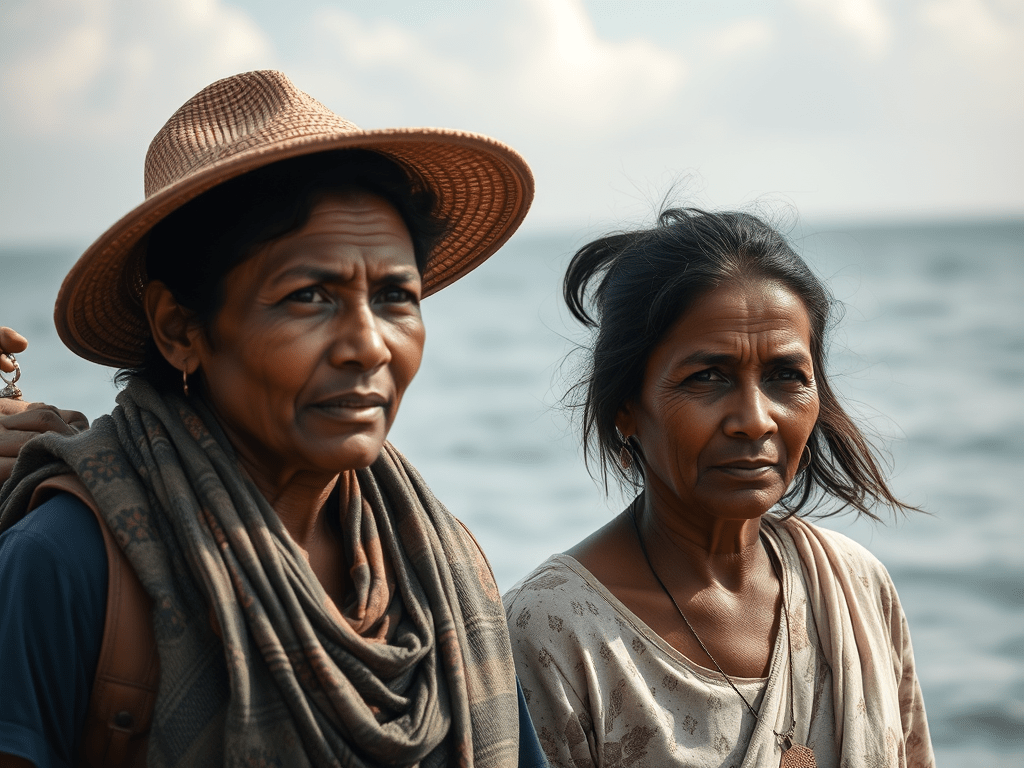
Indigenous communities have long practiced a form of environmental stewardship that is deeply tied to peace and community well-being. Protecting their rights and knowledge is crucial to creating lasting climate peace.
What We Can Learn:
Restorative justice through land restoration
Communal living as a resilience model
Respect for biodiversity as a peacekeeping principle
Protect the Protectors:
Uphold Indigenous land rights
Fund Indigenous-led climate programs
Challenge systems that exploit people and planet
Indigenous wisdom isn’t ancient—it’s essential. Their peace is our planet’s survival. 🌱🧭 #IndigenousRights #ClimateJustice”
Every year, millions are displaced not by war, but by rising seas, crop failure, and extreme heat. Climate refugees are often invisible in policy frameworks, yet their numbers are growing. This silent exodus demands a humanitarian and compassionate response.
The Reality:
Bangladesh: Displacement due to coastal flooding
Central America: Drought and agricultural collapse are driving migration north
Pacific Islands: Entire nations facing existential threat due to rising sea levels
A Call to Action:
Advocate for legal recognition of climate refugees
Support climate-resilient housing and relocation programs
Pressure governments to act with compassion, not criminalization
Not all refugees flee war. Some flee rising tides. Let’s open our hearts and policies. 🏝 #ClimateMigration #HumanRights”
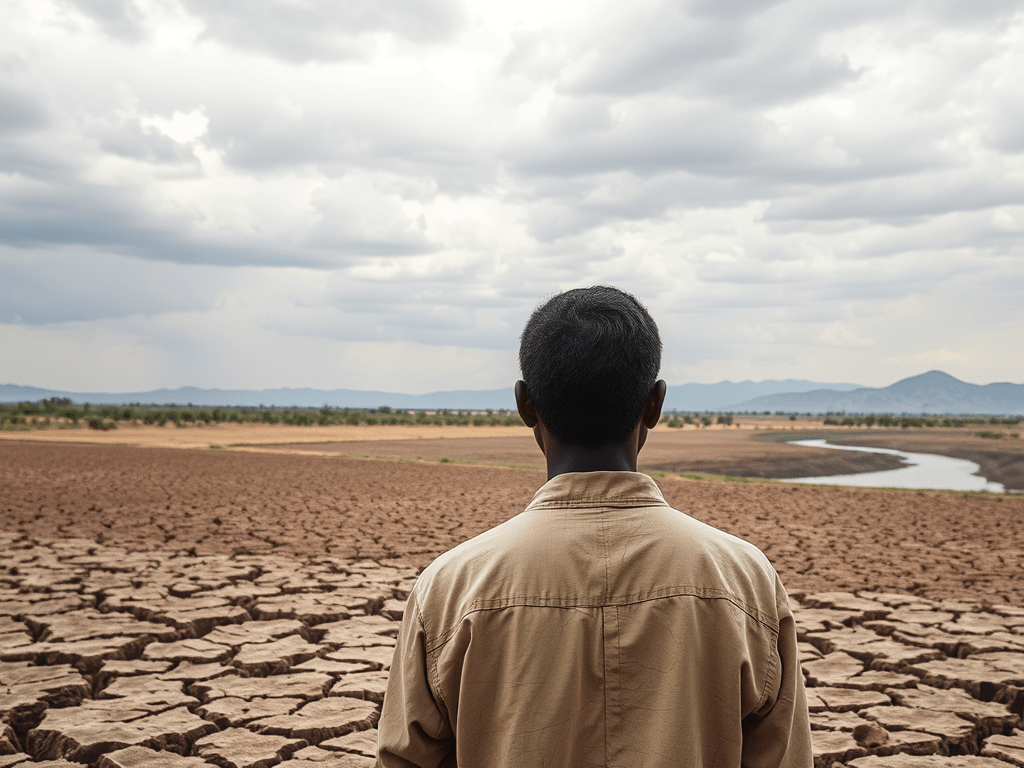
Climate change is not just an environmental issue—it’s a peace and security issue. As resources like water and arable land become scarce, competition intensifies, and conflicts can erupt. From Syria’s drought-driven instability to migration pressures in the Sahel, the climate-conflict nexus is real and growing.
The Hidden Crisis
Most discussions on war and peace overlook the environmental triggers beneath the surface. But we must ask: What happens when a farmer can no longer feed their family due to unpredictable rains? What tensions rise when a village’s only water source dries up?
Action Steps for Climate-Peacebuilders:
Advocate for climate-smart foreign policy
Support local peacebuilding organizations with environmental literacy
Promote water-sharing and sustainable agriculture initiatives
The climate crisis is a conflict catalyst. Peacebuilding must start with sustainability. 🌍🕊 #ClimatePeace #EnvironmentalJustice”
The climate crisis has created not just challenges—but opportunities for innovation. Today’s green jobs go beyond scientists and engineers. From carbon analysts to climate UX designers, the new wave of careers is as diverse as the crisis itself.
Top Emerging Roles:
Carbon Footprint Auditor
Sustainability Marketing Specialist
Climate Data Analyst
Eco-Inclusive Product Designer
Green Finance Consultant
Climate Communication Strategist
ESG Compliance Officer
Sustainable Urban Planner
Clean Tech Developer
Nature-Based Solutions Expert
What You Need:
Skills: Critical thinking, collaboration, data literacy.
These aren’t niche jobs—they are becoming the backbone of the new economy.
The green economy is hiring. Here are 10 climate careers that didn’t exist a decade ago—and how you can get one. #GreenJobs #ClimateCareers #FutureOfWork”
If you’re like most young people today, you’ve probably asked yourself:
“How can I build a career that actually matters?” “Is it even possible to make a living while making a difference?”
With the climate crisis growing louder, Gen Z isn’t content with just a paycheck. You want purpose. You want to help. You want a career that aligns with your values, your vision, and your planet.
The good news? You can have all three. We’re living in a moment where climate careers are exploding across every field, not just science and policy.
🌍 What Is a “Climate Career”?
A climate career is any job that contributes directly or indirectly to solving the climate crisis — from renewable energy and urban design to sustainable fashion, green finance, climate education, tech, farming, law, and storytelling.
It’s not just about working for an NGO. It’s about using your unique skills to support systems that protect people and the planet.
🚀 Why Climate Careers Are the Future
Massive Demand According to the International Labor Organization (ILO), the green economy could create over 24 million jobs by 2030. This includes fields such as clean energy, regenerative agriculture, and environmental justice.
Global Impact, Local Action You don’t have to work at the UN to change the world. From startups to city councils, your neighborhood needs climate thinkers and doers.
More Than Science Love design? Coding? Psychology? Communication? There’s a climate angle for every passion.
Personal Healing Working in alignment with your values is a powerful antidote to eco-anxiety and burnout. Purpose is medicine.
🔍 10 Surprising Climate Careers You May Not Have Considered
FIELD
EXAMPLE ROLE
🎨 Storytelling
Climate communicator or sustainability content creator
💼 Business
ESG analyst or sustainable supply chain strategist
🏛️ Policy
Environmental policy advisor or youth climate ambassador
💻 Tech
Green software engineer or climate data analyst
🌱 Agriculture
Urban farming entrepreneur or soil health specialist
🧠 Mental Health
Eco-therapist or youth resilience coach
🧵 Fashion
Ethical fashion designer or sustainable materials researcher
🏠 Architecture
Green building architect or passive house designer
💸 Finance
Climate risk analyst or carbon accountant
🌐 Education
Climate educator or curriculum designer
🌟 Your climate career doesn’t have to look like anyone else’s. The future requires a diverse range of minds.
💡 How to Get Started
Explore Your Interests What are you already good at? What excites you? Blend those answers with climate needs.
Follow Climate Leaders Learn from great voices, like those from the POP Movement, and others inspiring action around the world.
Start Small Take a course. Volunteer. Join a climate youth group. Every step counts.
Build a Green Resume Highlight climate-focused projects, activism, or certifications — even if informal.
Talk About It Let friends, mentors, and followers know you’re looking to build a climate-aligned career. Opportunities come through conversations.
🌿 You’re Not Too Young. You’re Right On Time.
This is the decade that will define the next century. We need coders and artists. Teachers and healers. Builders and dreamers. And we need you.
Whether you’re 16 or 26, your climate career starts with a single decision: To turn your concern into a contribution.
🔗 Ready to Learn More?
Coming soon: A free guide + webinar series with Ash Pachauri on “Finding Your Climate Career Path” — stay tuned!
For years, I struggled with a quiet, growing anxiety—one that came not from personal setbacks, but from headlines, data, and the looming climate crisis. Eco-anxiety isn’t just a buzzword. It’s real. And for many, especially youth, it can be paralyzing.
But I learned something powerful: the antidote to despair is action. When I began working with young climate leaders through the POP Movement, I saw firsthand how purpose dissolves fear. Through activism, innovation, and community, we can transform anxiety into energy, and fear into focus.
The Turning Point
I remember the exact moment that shifted everything. A 15-year-old girl from a village in India stood up during a POP workshop and said, “I never thought someone like me could make a difference.” Her words struck me. That moment was bigger than any headline. It was human. Real. It reminded me that hope is contagious when shared.
Steps You Can Take Today
Name Your Feelings: Recognizing that you’re overwhelmed, sad, or fearful about the planet is the first act of courage.
Find Community: Join a local climate club, youth action group, or virtual community. The POP Movement is one such network.
Start Small: Whether it’s a beach cleanup, a school awareness session, or even a social media post—small steps matter.
Use Your Skills: Are you good at writing, coding, organizing events, or storytelling? Apply that to climate action.
When you act, you shift your role—from spectator to changemaker. And in that shift, something remarkable happens: hope returns.
“Anxiety is real. So is action. 🌍💚 Read how I turned despair into purpose—and how you can too. #EcoAnxiety #ClimateAction #POPMovement”
Global conferences, such as the World Economic Forum (WEF), gather world leaders, scientists, and NGOs to address climate issues. While they’re essential, they often move slowly.
What They Don’t Tell You:
Solutions already exist in communities.
Youth are leading some of the most creative responses.
Change doesn’t need a permission slip—it needs action.
Take Local Action If you’re not at the negotiating table, consider creating one in your school, on the street, or in your city. From solar panels on schools to waste reduction projects, your actions have a ripple effect. Think globally. Act locally. Lead personally.
“Big change often starts in small communities. Here’s why local action is just as powerful as global policy. 🌍✊ #ActLocal #ClimateLeadership #WEFWatch”
It’s hard to stay optimistic when every scroll or headline tells a grim story. But hope is not the absence of struggle—it’s the determination to create a better future in the face of it.
My Hope Practices
Limit doomscrolling: Set boundaries around news consumption.
Celebrate small wins: Every tree planted, every youth empowered, every behavior changed counts.
Practice gratitude: Keep a journal. Reflect daily.
Talk about it: Don’t carry the burden alone. Join circles and support spaces.
Why Hope is a Discipline We don’t have to ignore the bad to believe in the good. Hope is a discipline that can be strengthened. We owe it to ourselves and each other to keep the light on.
“Feeling overwhelmed by climate news? You’re not alone. Here’s how I hold onto hope—and how you can too. 🌤️ #ClimateHope #MentalHealth #SustainableMindset”
When we talk about legacy, we often think of buildings, businesses, or awards. But what if legacy is less about what we leave behind—and more about what we empower others to carry forward?
For me, climate leadership is not about commanding attention or titles. It’s about enabling young people to see themselves as catalysts. It’s about creating ripples that turn into waves. And it’s about making sure that our fight for the planet outlives us.
Why Youth Are the Legacy
Every time a young person stands up, speaks out, or creates change in their community, they are writing a new chapter in our collective future. Legacy isn’t built at the end of life—it’s built in every moment of courage, connection, and action.
I’ve seen this in the POP Movement: in a girl from Nigeria launching a recycling campaign; a boy in Peru building solar cookers; youth in Mexico organizing climate festivals. These are not isolated acts. They are echoes of a legacy that grows with every voice that joins.
Build Your Legacy—Now
Mentor someone younger: Leadership multiplies when it’s shared.
Document your journey: Your story can become someone else’s spark.
Invest in others: Time, trust, and support are powerful currencies.
Think long-term: What change do you want to seed today that will bloom tomorrow?
Legacy is not reserved for the powerful or the old. It belongs to those willing to lead with purpose today so others can live with dignity tomorrow.
Legacy isn’t what you leave behind—it’s what you lift up. Here’s how youth climate leadership is shaping a future worth inheriting. 🌱 #ClimateLegacy #YouthLeadership #POPMovement”
Leadership lessons don’t come from textbooks—they come from people. My father, Dr. R.K. Pachauri, lived a life of purpose, integrity, and service to humanity.
He taught me:
Serve first: Leadership is about enabling others.
Be curious: Always ask questions and seek solutions.
Stay grounded: Whether speaking to heads of state or students, treat everyone with respect.
Act boldly: Don’t wait for the perfect moment. Start now.
A Legacy That Guides Me
As I continue to walk in his footsteps with the POP Movement, his teachings are my compass. His legacy lives on in youth leaders around the world who carry the torch of climate action.
A legacy of leadership I carry forward. 🌏 #Leadership #Legacy #RKPachauri”